Tuesday, 29 December 2015

The Gender Issue

Women bear the brunt of climate related issues on the water cycle (Source: WaterAid
In my previous blog post I briefly looked at the areas of the world that were experiencing both physical and economic water scarcity. Competition for water resources is increasing, mainly due to the increasing pressures from agriculture, industry and the environment. Those people that will be the worst affected by these pressures are the poor and within this group, it is women that end up paying the price.

Two thirds of the worlds 1.2 billion poor people are women (IFAD, 2012). Amber Fletcher described these women as “invisible food producers” in her most recent TEDx talk in July 2015. Being the optimist I am, this concept is unsettling. The point she was making was that farmers are stereotypically thought of as male and therefore created an invisible connection between the problem and the solution. This problem however, has been outlined in a United Nations sponsored report by the International Fund for Agricultural Development.

The gender issue has been recognised as one that needs to be addressed in this sector as women play such a vital role in securing water for both agricultural and domestic purposes. In many communities it is seen as their responsibility to keep sanitation facilities in order, along with the daily collection of drinking water from local wells. They have developed great knowledge over crop production and water resources through first hand experiences, yet there is an ever-growing gap between policy and practice. Although the problem has been discussed by such organisations, governance has still not given women the recognition they deserve, as they still remain excluded from decision-making.

With Climate Change putting increasing pressures on water resources, it is no doubt that women will be at the forefront of this. With increased floods and droughts, adequate drinking resources are being tampered with. Women will need to travel further to collect water, taking valuable time out of their days; impacting potential time spent on an education. Sadly, this journey has also jeopardised women’s safety, as cases of violence have unofficially been reported in South Sudan. Additionally a study by Neumayer and Plümper (2007) found that natural disasters, especially those heightened by a changing climate, would result in the death of more women than men.

Accepting that there is a gender issue is the first step. The second would be to focus more efforts on tackling the issues associated with the inequality, and third, empowering women with responsibility over water resources they already possess great knowledge over. If it’s as easy as one, two, three, then why has this not happened yet? Why are we still seeing such a disparity between the effects on men and women? Climate Change is happening now, and we have a social responsibility to women across the world to tackle these humanitarian rights immediately. 

Saturday, 26 December 2015

Stress vs. Scarcity

Source: Global physical and economic water scarcity (2007) 
In order to determine those areas which are most vulnerable to water insecurity, it is important to distinguish between some key terms. Water stress is a measure of availability and is referred to when annual water supplies drops below 1,700mper person for any given area. When this figure reaches below 1,000m3, the issue becomes one of access and the region is then said to experience water scarcity (WWAP, 2012). 

This map from the UN splits water scarcity up into physical scarcity and economic scarcity. Physical water scarcity refers to when water resources have exceeded their sustainable limits; this does not necessarily mean that dry areas are therefore physically water scarce in this sense. Economic water scarcity refers to the financial capability to extract water from a particular area; therefore some areas may be abundant in water supplies but may not have the means to use this water.  

It may be easier to determine which regions are experiencing water stress due to the quantified definition, however when discussing scarcity it becomes somewhat more difficult. Although there is a threshold of 1,000m3,  the extent of which regions experience physical and economic scarcity are changing all the time, and so defining those regions experiencing this can sometimes be difficult. At present, one third of the world's population is experiencing some kind of physical or economic water scarcity.

Wednesday, 16 December 2015

The race for what's left

With the world’s population reaching 7.3 billion people this year, there is no doubt that new pressures are being put on nation’s natural resources. One of these major pressures is land space and the water resources associated with them. As a result “land-grabs” have been a new phase of foreign direct investment, especially within African farmland (Allan, 2013). Even though most countries have the space to be potentially food self-sufficient, they do not necessarily have enough water to do so. Therefore, areas such as Sub-Saharan Africa, are leasing land at reduced prices to countries such as China, India and Saudi Arabia (Ananthaswamy, 2011). This dash for resources may appear to be a suitable solution, however could lead to potential conflicts between nations.

Over a period of 5 years, Saudi Arabia leased 376,000 hectares of land in Sudan in order to grow food to be exported back to their homeland. This is a relatively cheap solution as it costs less than developed irrigation systems. However I find myself asking, why don’t these countries just import the food they need? Suweis et.al (2011) suggests that due to the complexity of trade markets, the driving forces of an increasing population and increased economic development, is forcing these water-poor countries to increase their security. In a changing world, leasing land at a fixed price is not subject to the market forces of food supply and therefore ensuring those at the top, stay there.

With the rich getting richer and solutions to potential water conflict being resolved short-term, are there any adverse long-term effects that may result? D’Odorico et.al (2010) suggests that these land-grabs within the virtual water network may result in societies becoming less resilient to severe droughts. This exploitation of otherwise unused supplies could dry-up resulting in catastrophic consequences in the future. With Climate Change increasing the likelihood of severe droughts occurring, tensions will rise as the fight for land may see these big players at the top looking for alternative solutions to the problem sooner than they originally thought.
Source: Chris Madden


Tuesday, 15 December 2015

What is Virtual Water?

Figure: The backbone of the GVWTN, with the blue dots representing net exporters and red dots representing net importers (Suweis et.al 2011)

This concept of "virtual water" was defined by J.A. Allen (1998) as the water which is embedded in commodities. Since an individual is classed as short of water if they are unable to access one cubic metre of high quality drinking water each year, there are many regions in the world where water scarcity is a major issue. The movement of "virtual water" between these regions is known as the Global Virtual Water Trade Network (GVWTN).

The network shown in this figure from Suweis et.al. (2011) represents that 80% of the total water volume only moves through 4% of the total number of links, meaning that a small number of countries have a large network of connections. This creates a disparity between water-rich countries and those which are water-poor. For example, the United States, Argentina and Brazil are some of the main exporters of water shown in this figure, whereas Japan and China are some of the larger importers.

Monday, 23 November 2015

The Glass is Half Full

Looking back over the last 15 years, how realistic is the new Sustainable Development Goal on water and sanitation? 

Source: The 17 SDGs adopted by 193 nations
It is interesting to observe how much things have changed in 15 years. The Millennium Development Goals (MDGs) at the beginning of the century incorporated targets for Water, Hygiene and Sanitation under the heading ‘Goal 7: Ensure Environmental Sustainability’, out of a total of 8 goals. This year, 17 Sustainable Development Goals (SDGs) have been established with Goal 6 dedicated to ensuring availability and sustainable management of water and sanitation for all. With more goals to focus on, will this hinder the ability to achieve them? Or does specific focus allow for more issues to be addressed?

In terms of water, the MDG set in 2000 was very much a success on the surface. The aim to reduce the proportion of people without access to an improved drinking water source, by 50%, was achieved 5 years ahead of schedule, according to a report published by the UN in 2014. However this only focused on drinking water and sanitation, and a number of additional issues were not targeted. With Climate Change shifting the way we view our resources, it is vital that all aspects of the water cycle are taken into consideration in order to achieve the aim to “leave no-one behind”.  

This year, the SDG for water and sanitation will now include the sustainable management of water, wastewater and ecosystem resources. Six additional targets have been incorporated within this goal which I believe is a step in the right direction to tackle these additional issues. We have proven that we are able to hit targets, so why stop there? With greater international involvement, including middle/low-income countries, these SDGs are the most universal yet. They take into consideration basic human rights standards across the board, with a number of the goals having cross-disciplinary implications.

With these goals expecting to shape political policy across 193 countries, a greater range of goals might seem unachievable to many. However I remain optimistic. We are finally addressing a number of water management issues which 15 years ago were swept under the carpet.

Wednesday, 18 November 2015

What does 'Water Security' mean?

Source: inkcinct cartoons 
The United Nations (2013) defines water security as “the capacity of a population to safeguard sustainable access to adequate quantities of acceptable quality water for sustaining livelihoods, human well-being, and socio-economic development, for ensuring protection against water-borne pollution and water-related disasters, and for preserving ecosystems in a climate of peace and political stability”.

It seems to me that everyone, everywhere should have sustainable and adequate access to a water supply however in the world we live in this is not always the case. It was not until 2010 that Vörösmarty et.al produced the first worldwide synthesis to consider both the human and biodiversity perspectives towards water security. The article concluded that 80% of the world’s population was exposed to high levels of threat to water security; this figure included both developed and developing countries. 

This means that 4.8 billion people (from the data taken in 2000) do not have sustainable access to adequate quantities of acceptable quality water. 4.8 billion people are unable to sustain their livelihoods and human well-being, and additionally are subject to water-related disasters. If I’m honest, I was a little surprised by this.

Water security comes in many forms and it is not just those in remote parts of the world that appear to be suffering. The impacts on biodiversity can be greatest in developed areas, especially along river catchments. Vörösmarty et.al (2010) suggests that in order to protect these areas, developed countries must look into re-engineering existing structures. There is a socio-economic message that is also concluded in this article which developing countries are able to take away. In order to avoid the high costs that these heavily engineered water development systems have created in developed nations, a few less extensive options such as preserving river floodplains could be extremely beneficial.

With anthropogenic climate change set to further increase this level of threat, it will be down to major environmental policy and/or financial commitment from both developed and developing countries, to ensure they remain water secure and threats to biodiversity are minimized.

Wednesday, 11 November 2015

KISILU: The Climate Diaries

An upcoming documentary about a family at the frontline of Climate Change.

Source: Kisilu Filming
Yesterday I attended a screening of the new Al Jazeera Witness documentary about how climate change is affecting a farming family in Mutomo, Kenya. The Kenyan farmer, Kisilu Musya, documents both physical and human challenges which he and his family have been facing over four years. Footage of devastating droughts, floods and storms have had massive human impacts on his family and the community in Mutomo.

Yet it comes as no surprise to me that such weather events had the impacts they did. Maybe this is because I have been studying in this field for a long time now and such impacts are known to me. However this documentary captured something more powerful than just a diary about climate change. It is a story of persistence and the refusal to give up when everything around him comes crashing down.

“I don’t have money to help, but I have the knowledge”

A story of a man who spends his life teaching others about how to combat climate change is not only inspiring for others in his community but its message can be spread worldwide. Sure, having money to tackle some of the day-to-day issues would be beneficial (the irrigation system set up towards the end of the documentary showed this), yet the knowledge and ambition Kisilu has is invaluable.

Without giving too much away, I would strongly recommend watching this documentary when it airs in December. The release coincides with the UN Climate Change Conference in Paris, which Kisilu has since been invited to. 

Thursday, 29 October 2015

"Hello there everybodeeeee!"

The World Banking Group partner with Sesame Street to educate children about WASH.

Tweeting about the importance of clean water, sanitation and hygiene comes somewhat easily to Big Bird.

I found this video around the time of the Global Citizens Festival in September and thought my blog would be the perfect place to share it. It came as quite a shock to me that nearly a third of the world's population still do not have access to toilets. Nevertheless the WBG highlights the great work organisations such as WaterAid have been doing to tackle this issue.

Whether these furry creatures will have a great impact on the masses is a different matter. However the little child within me hopes that this could be a step in the right direction to educating the next generation of climate enthusiasts.

Tuesday, 27 October 2015

A battle to be won?

The climate crisis is posing a great threat on water security for millions of people and every year more devastating events seem to be occurring. In my first post I touched on a popular news story which seems to be grabbing the headlines in 2015- The Worst El Niño in 15 Years? Natural Phenomena like this are increasing in intensity and frequency, but how are we supposed to prepare for such events in a changing climate?

“Water is the matrix of culture, the basis of life”

It is thanks to Vandana Shiva, author of Water Wars: Privatization, Pollution and Profit that inspired this blog which focuses on such a fundamental aspect of all life on Earth. In the coming months I plan to explore what it means to be water secure in the current climate and the environmental, social and political impacts it is having on various communities around the world.

Water security is a very broad topic, but some of the key aspects for me is the impact Climate Change is having on food supplies and WASH (Water, Sanitation and Hygiene). I believe that this plays an important part in international development, health and education.


Millions of people are fighting this war every day; it is not just in those countries stricken with poverty which are being effected. It would be in the world’s best interest to find a solution to the problem- if it is not already too late. 

Source: A climate deniers approach to worldly issues? 

Thursday, 15 October 2015

The Worst El Niño in 15 Years?

The Southern Oscillation event is likely to be the strongest since 1997-98 claims a new update from the World Meteorological Organisation.

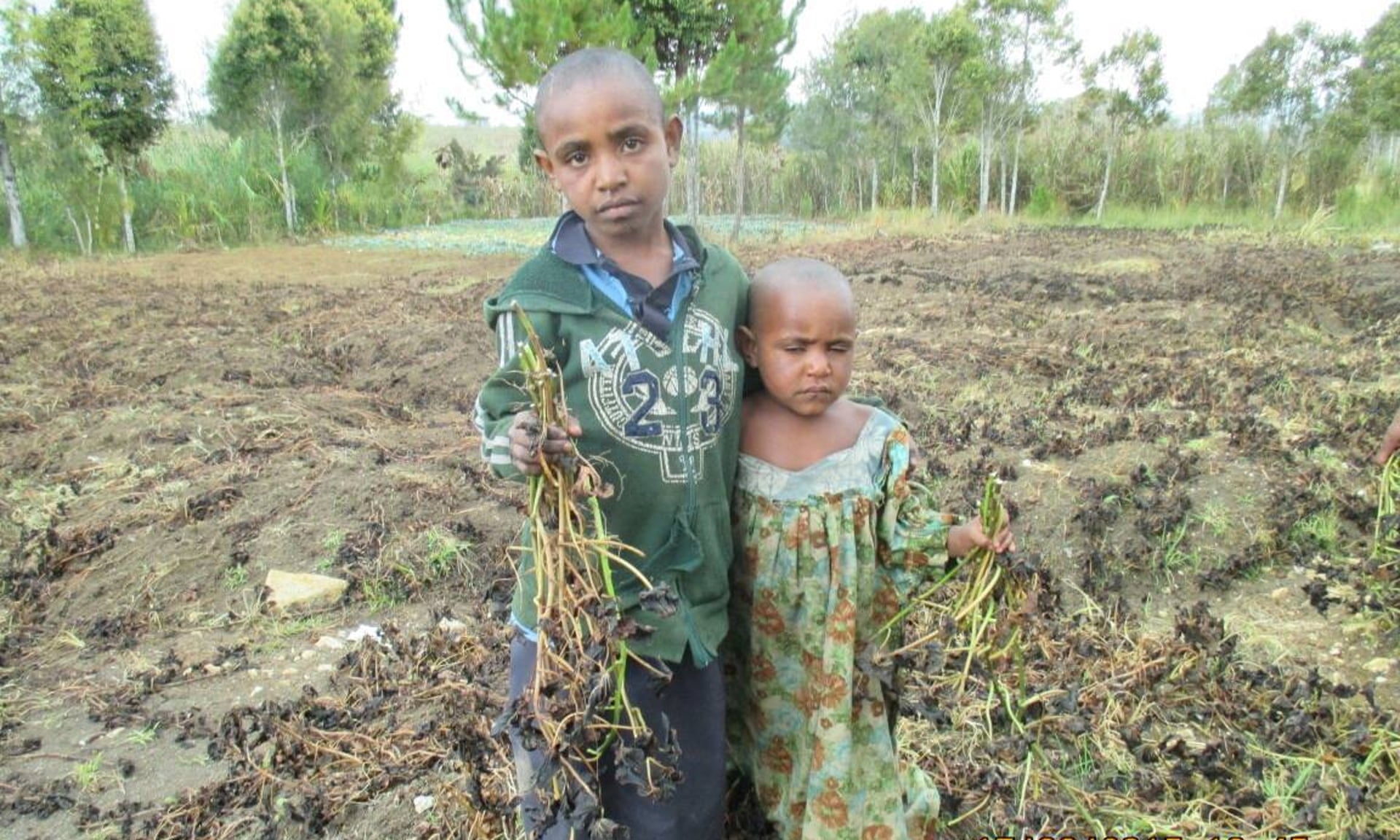
Children at Algi Village in Papua New Guinea could experience some of the worst droughts in almost 20 years. Photograph: AAP/Care 
A recent report from Oxfam outlines the devastating impacts of this on the water cycle. 4.5 million people in Ethiopia are already in need of food aid due to successive drought periods over the last year. In addition to this, countries such as Zimbabwe have seen a 35% decrease in their maize harvest period. This is predicted to impact up to 1.5 million people by early 2016. Unfortunately, it has been reported that 24 people have already died of starvation in Papua New Guinea due to droughts in the Highlands region.

Could this have been prevented?

Oxfam suggests that meteorologists and international agencies have provided sufficient warning of El Niño and that if governments had been better prepared, then international emergencies like this could be avoided. Compared to 15 years ago, we are more prepared to deal with these disasters, however with a changing climate it is proving difficult to determine the true extent of such events. Director of the World Meteorological Organisation, David Carlson, explains how the recent changes in the climate system makes El Niño difficult to understand:

“We have had years of record Arctic sea ice minimum. We have lost a massive area of northern hemisphere snow cover, probably by more than 1 million square kilometres in the past 15 years. We are working on a different planet and we fully do not understand the new patterns emerging."

With Paris on the horizon, it will be interesting to see how countries commit to tackling such uncertainties.